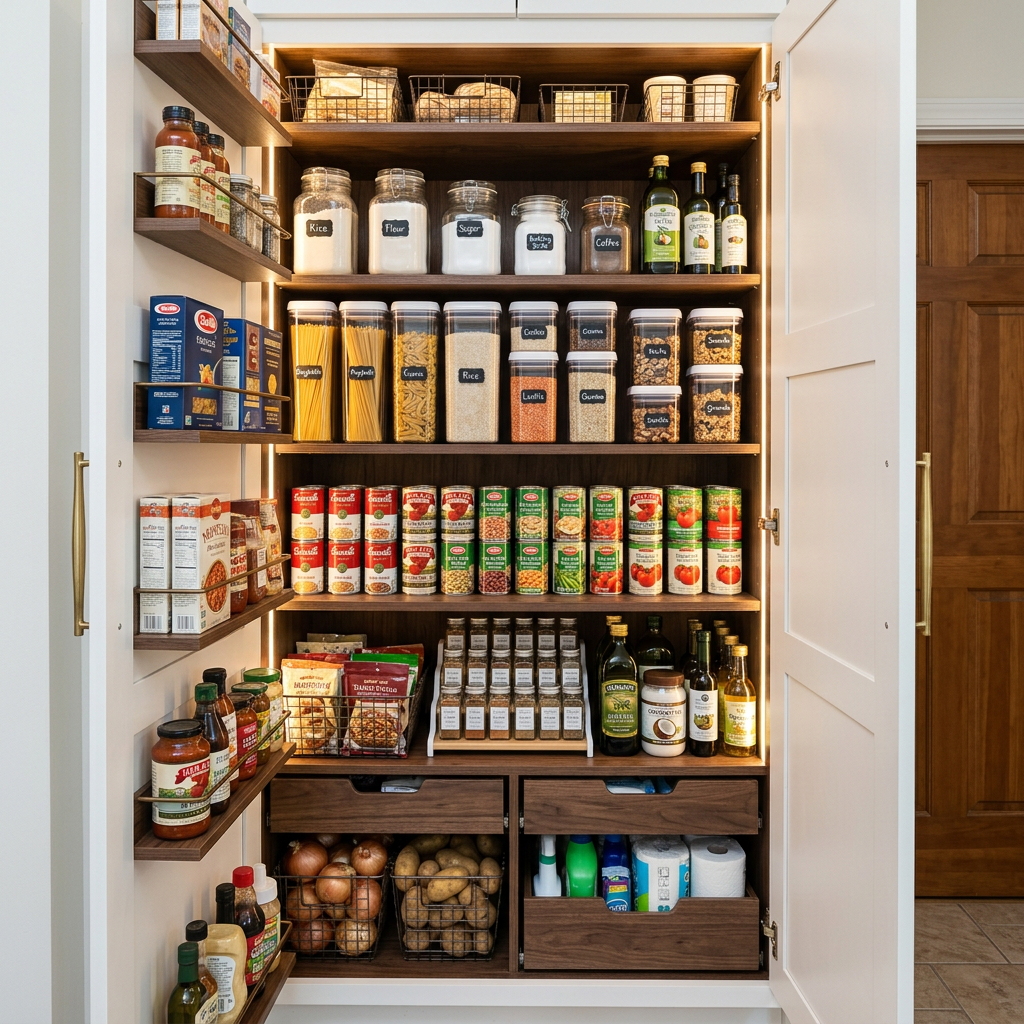
A stocked pantry isn’t about prepping or hoarding. It’s about this specific moment: it’s 7pm, you’re tired, there’s nothing obvious to eat, and the delivery app is right there.
That moment costs about $28 every time it wins. A pantry that can produce a decent dinner from nothing is what makes it lose.
The staples that earn their space
Rice and pasta
Cheap per serving, effectively immortal, and the base of dinner rather than a side dish. Buy the store brand. Nobody in the history of pasta has identified the brand from the plate.
Canned beans and canned tomatoes
These two together make soup, chili, pasta sauce, and a rice bowl. Under a dollar a can, two-year shelf life, and they turn “nothing to eat” into an actual meal in fifteen minutes.
Eggs
The cheapest protein in the store and the fastest dinner you can make. Eggs on rice with whatever vegetable is in the freezer is a real meal, and it takes ten minutes.
Frozen vegetables
Already covered this, but it bears repeating for one person: you use what you need and the bag waits. Zero waste, which makes them cheaper in practice than fresh even when they cost the same.
Onions and garlic
They last for weeks on the counter, cost almost nothing, and are the difference between food that tastes like something and food that tastes like a sad Tuesday.
Stock or bouillon
Bouillon base in a jar beats boxed broth for one person — it doesn’t take fridge space, it doesn’t expire in a week once opened, and you make exactly as much as you need. My favorite is better than bouillon I think about it from Costco they have the largest jar that I’ve seen a lot of other places do carry but they have a smaller jar and it’s about the same price as a large jar I get from Costco.
Oil, vinegar, soy sauce, and about six spices
Salt, pepper, garlic powder, paprika, cumin, and a dried Italian blend will carry almost everything you cook. Buy spices from the bulk bins or the international aisle if your store has one — the same spice is often a third of the price a few aisles over.
What doesn’t earn its space
The pantry advice written for families falls apart when you’re one person. Skip these:
- Giant bags of flour and sugar — unless you bake regularly, they go stale and attract pantry moths. Buy small.
- Specialty ingredients for one recipe — the bottle of fish sauce you bought for one dish in 2023 is still there, isn’t it?
- Warehouse-club anything perishable — the per-unit price is only better if you eat it all, and for one person you usually won’t.
- Twenty spices — most go stale before you finish them. Six good ones you actually use beats a full rack you don’t.
Build it over a month, not in one trip
Stocking a pantry from scratch in a single trip is a $120 shop, and that’s exactly the kind of expense that makes people give up on the idea entirely.
Add two or three staples per grocery trip instead. In a month you’ll have the whole thing, and you’ll never have felt it.
A FEW THINGS THAT HELP
A pantry only works if you can see it. Three small things that make the difference:
- Bouillon base — one jar replaces a shelf of boxed broth and lasts months in the fridge. Compare the price to your grocery store’s; sometimes the store wins.
- Clear stackable bins — the second jar of cumin you already own is hiding behind the cereal. Bins are how you stop buying doubles.
- Airtight canisters for rice and pasta — bulk bags are the cheapest way to buy these, but only if they don’t go stale or attract pantry moths in an open bag.
These are affiliate links. If you buy through them I earn a small commission at no extra cost to you — it helps keep this site running.
The three dinners test
Here’s how you know your pantry is doing its job: you can walk into your kitchen with no fresh groceries at all and make three different dinners.
Pasta with tomatoes, garlic, and oil. Rice with a fried egg and frozen vegetables. Bean soup with onion and stock.
None of those are impressive. All of them cost under $2 a serving. And all of them beat the delivery app at 7pm on the night you have nothing left to give.







Leave a Reply