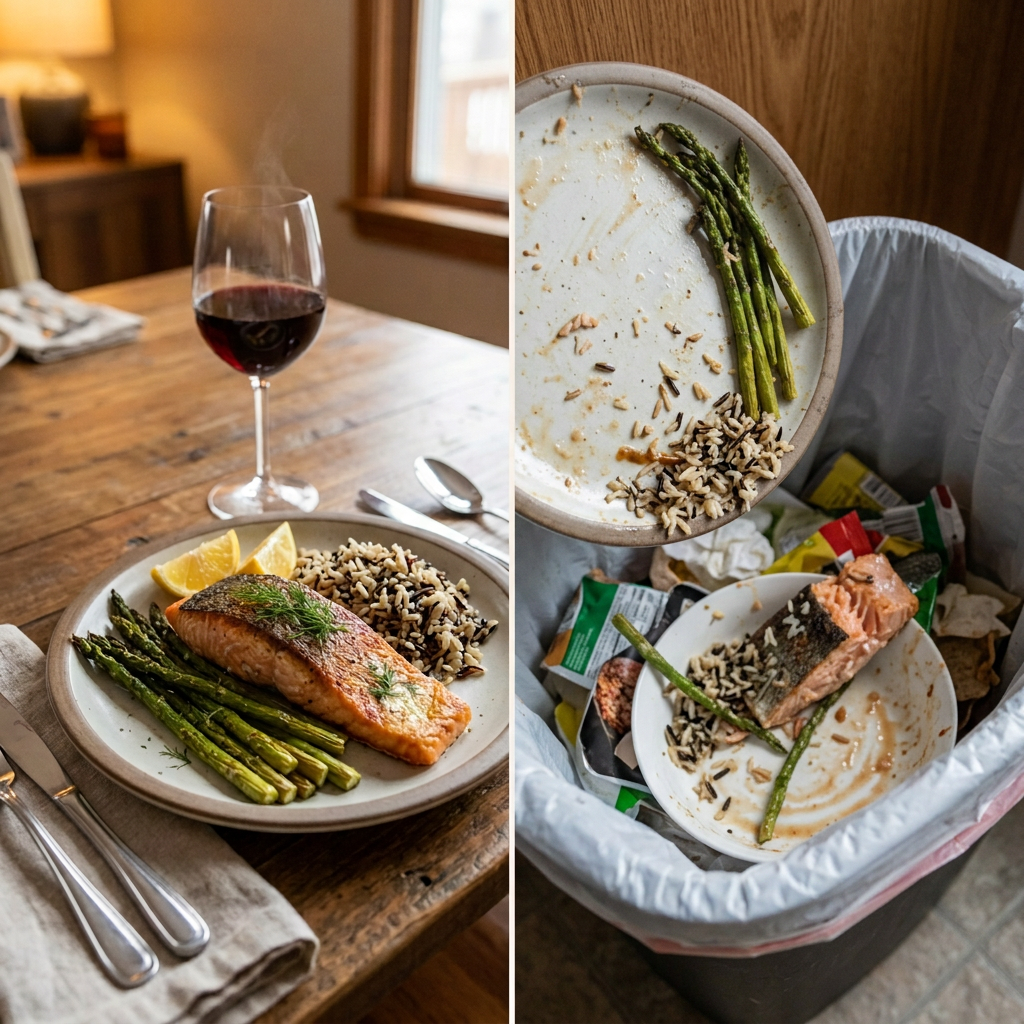
Nobody tells you that the hardest part of cooking for one isn’t the cooking. It’s the shopping.
Groceries are packaged for a family of four. Bread comes in loaves you can’t finish. They do have now have the small loaf which is great for one person households. Produce comes in bags. Chicken comes in packs of six. So you buy it, you use a third of it, and the rest quietly goes bad while you order takeout because there’s “nothing to eat.”
That waste is real money. Here’s how to stop it.
Shop for four days, not seven
The single biggest fix is shortening your shopping window.
A week of fresh food for one person is optimistic. By day five you’re bored of everything you bought, and by day seven the spinach has turned. Two smaller trips beat one big one, because you’re buying what you’ll eat in the next few days rather than guessing what you’ll want on Saturday.
Yes, it’s an extra trip. It’s also the difference between using 90% of what you buy and 60%.
Buy the ingredient that shows up three times
When you’re shopping for one, every ingredient needs to earn its place by working in more than one meal.
A rotisserie chicken is the classic example — sandwiches, then a grain bowl, then soup with the carcass. But it works for anything:
- A bag of spinach → eggs, a side salad, wilted into pasta
- A block of cheese → sandwiches, eggs, melted over roasted vegetables
- A container of Greek yogurt → breakfast, a sauce base, a sour cream stand-in
If something only works in one dish and comes in a big package, it’s usually a waste risk. That’s the test.
The freezer is your second person
You don’t have someone to help you finish the family-size package. Your freezer does that job.
Buy the six-pack of chicken thighs because the per-pound price is genuinely better, then split it into portions the day you get home. Not later. The day you get home, while you’re still standing in the kitchen with the bags.
Bread freezes. Cheese freezes. Cooked rice freezes. Half a can of tomato paste freezes in a spoonful on a plate. Milk freezes if you pour a little off first.
The bulk discount is only a discount if you actually eat it all.
WHAT MAKES PORTIONING PAINLESS
The reason people skip the portioning step is that it’s annoying without the right containers. Three things that fix that:
- Single-serving glass containers — the ones that go freezer to microwave without transferring. Buy a set of ten, not four.
- Reusable silicone freezer bags — flat-freeze chicken or soup and it stacks like files instead of taking a whole shelf.
- Dissolvable freezer labels — cheap, and they end the mystery-container problem that makes you buy fresh instead of using what you have.
These are affiliate links. If you buy through them I earn a small commission at no extra cost to you — it helps keep this site running.
Frozen produce is not the compromise you think it is
For one person, frozen vegetables are often the smarter buy — not the lesser one. They’re frozen at peak ripeness, they cost less, and critically, you use exactly what you need and the rest waits.
Fresh is worth it for the things you’ll eat raw and eat fast. For anything that’s going into a pan, frozen is doing you a favor.
Shop your kitchen first
Before you write a list, look in the fridge, freezer, and pantry. Actually look — pull things forward.
Most of us buy a second jar of something we already own because we forgot it was behind the cereal. Five minutes of looking will usually knock two or three items off the list before you leave the house.
Give yourself a takeout night on purpose
This one saves more money than it costs.
If you shop for seven dinners and you’re realistically going to order food twice, you just bought two dinners you’re going to throw out. Plan for five, budget for the takeout, and stop buying food to feel virtuous about food you won’t cook.
What this actually saves
Most people throwing away spoiled groceries are losing somewhere between $30 and $60 a month. That’s not a rounding error when you’re on one income — that’s a sinking fund contribution, fully covered, by nothing more than buying less and freezing faster.
Start with the four-day window. It’s the change that does the most on its own.





 The SingleGirl Hustle
Leave a comment