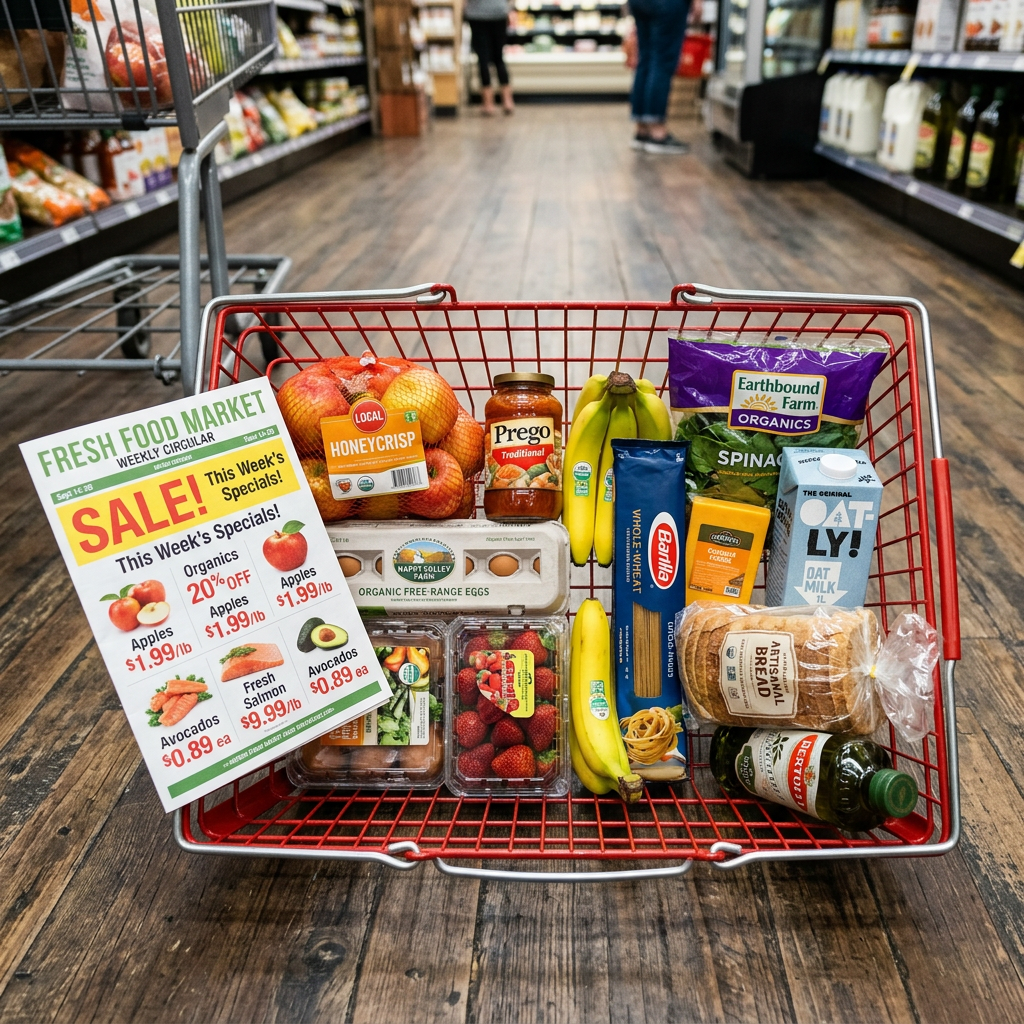
There are two ways to shop the sales. One of them saves you real money. The other one is a hobby that costs money and calls itself saving.
The difference comes down to one thing: are you buying things you were already going to buy, or are you buying things because they’re on sale?
Build the list from the sale, not the other way around
Most people write a meal plan on Sunday, then go to the store and pay whatever things cost that week. That’s backwards.
Protein is where your grocery money actually goes. Chicken thighs at $1.79 instead of $3.49 changes your bill more than every coupon in the circular combined. Let the sale pick the meal.
Flip it. Look at the weekly ad first — most stores post it in their app — and see what protein is discounted. Then build three or four dinners around that.
This takes about ten minutes and it’s the highest-return ten minutes in your whole grocery routine.
Learn the sale cycle for four things
Grocery sales run on roughly a six-week rotation. Anything you buy regularly will hit its low price about every six weeks.
You don’t need to track this for a hundred items. Pick the four things you buy most — for a lot of us that’s chicken, coffee, laundry detergent, and whatever cheese you keep in the house — and just notice what the good price is.
Once you know that chicken thighs are good at $1.79 and not at $2.99, you stop guessing. You stock up at the low, skip it at the high, and never pay full price for those four things again.
IF YOU’RE GOING TO STOCK UP
Buying at the low price only pays off if the food survives the freezer. Two things that protect the savings:
- A vacuum sealer — the reason people stop stocking up on sale meat is freezer burn three months later. Sealed portions hold for a year instead of a season. This is the one purchase that actually pays for itself here.
- Stackable freezer bins — a stocked freezer you can’t see into is a stocked freezer you’ll shop around. Bins by category mean you use the deal instead of burying it.
These are affiliate links. If you buy through them I earn a small commission at no extra cost to you — it helps keep this site running.
The overbuying trap
Here’s where sale shopping turns on you.
A good price triggers something. You see the deal, you feel the urgency, and you buy four of them — and if you’re shopping for one person, you have just purchased a month of that item and roughly zero freezer space.
Two rules keep this in check:
- Only stock up on things that don’t spoil — freezer items, canned goods, paper products, cleaning supplies. Never fresh produce, no matter how good the price looks.
- Buy six weeks’ worth, maximum. That’s when the sale comes back around. Buying more than that is storing food, not saving money.
And the honest test, every time: would I have bought this at full price this month? If no, it isn’t a deal. It’s a purchase you weren’t going to make, at a discount.
Skip the extreme couponing
You’ve seen the videos. Six hours of clipping, three store trips, a cart of thirty deodorants, four dollars at the register.
Run the math on that as an hourly rate and it usually isn’t good — and coupons cluster heavily on processed and packaged food, which is rarely what you actually want to be eating.
What’s worth your time instead: your store’s loyalty app, digital coupons clipped in about ninety seconds while you’re in line, and a cash-back app if you’ll genuinely remember to use it. That’s most of the benefit for almost none of the effort.
Store brands are the easiest money on this list
Swapping name brands for store brands typically cuts 20–30% off a grocery bill, and for pantry basics — flour, sugar, rice, canned tomatoes, frozen vegetables, spices — the difference is usually undetectable.
There will be two or three items where you genuinely taste it and prefer the brand. Keep those. Switch the rest. It requires no planning, no app, and no extra trips.
Put a number on it
Decide your grocery budget before you shop, and track the total as you go — the running total in your phone’s calculator is enough.
Sale shopping only works inside a limit. Without one, the savings just get spent on more groceries, and you leave feeling thrifty with a receipt that says otherwise.
Keep more of your grocery budget every month
This is one piece of the puzzle. Get the rest of the Hustle Budget playbook — sinking funds, bill planning, and paycheck budgeting — built for living well on one income.





 The SingleGirl Hustle
Leave a comment